
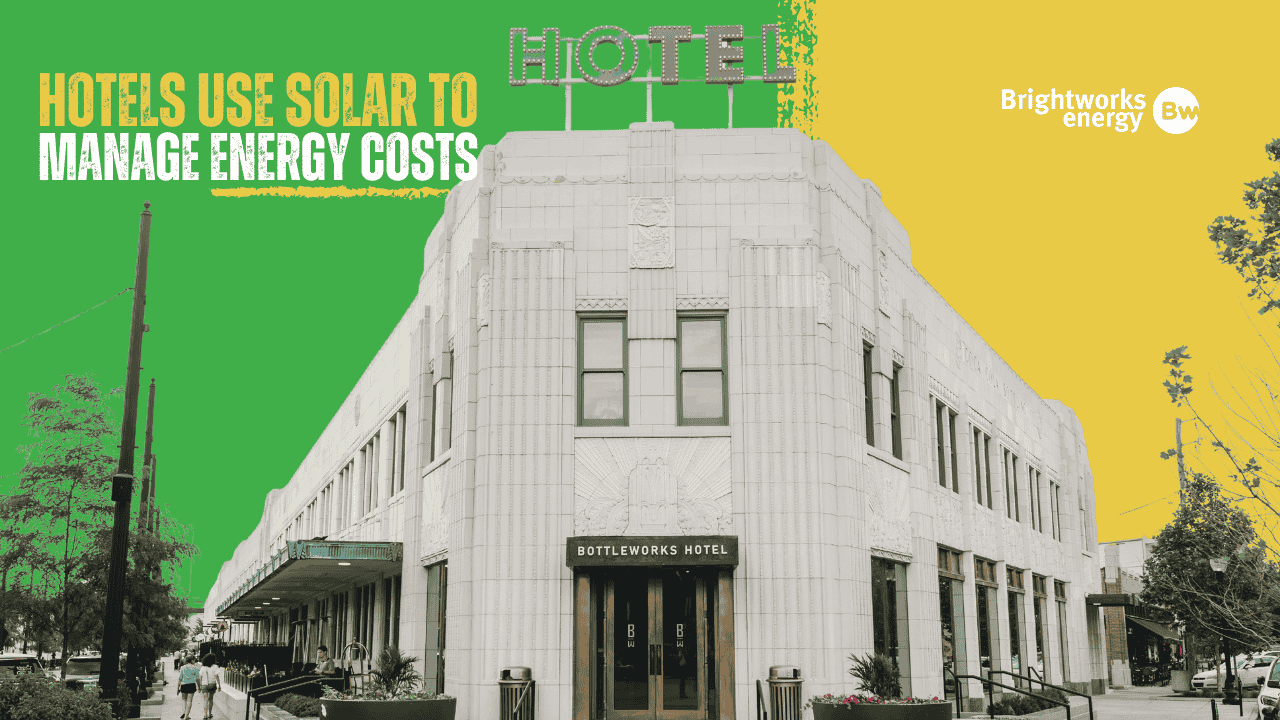

Electricity costs are becoming an increasing concern for hotel operators across Ontario. Commercial solar is emerging as a practical way for hotels to stabilize long-term energy costs and reduce exposure to rising utility rates.
For many years, solar energy was promoted primarily as a sustainability upgrade.
Businesses installed panels to lower their carbon footprint or demonstrate environmental leadership. While those benefits remain important, the conversation around solar is beginning to change.
Today, more commercial property owners are evaluating solar through a financial and operational lens. Instead of asking whether solar is a “green initiative,” they are asking whether it can help manage long-term energy costs.
In Ontario’s hospitality sector, that shift is becoming particularly noticeable.
Hotels Operate on Constant Energy Demand

Hotels have a unique energy profile compared with most commercial buildings. Offices, retail stores, and industrial facilities often experience large drops in energy use during evenings and weekends. Hotels rarely see those kinds of fluctuations.
They operate continuously, providing services to guests around the clock. Electricity is required for essential systems such as heating and cooling, guest room lighting, kitchens and restaurants, laundry operations, elevators, and pools or spa facilities.
This constant demand means electricity costs represent a significant operating expense. Even modest changes in utility rates can have a measurable impact on profitability over time.
Rising Electricity Costs Are Changing the Conversation
Across Ontario, utilities periodically apply for delivery rate increases, while long-term projections suggest that generation and infrastructure costs will continue to rise. For hotel operators already managing tight margins, this introduces a degree of financial uncertainty.
Energy becomes one of the few major expenses that business owners cannot directly control.
As a result, more hotel owners are beginning to think differently about energy planning. The conversation is gradually shifting from “Is solar worth installing?” to a more strategic question: how much of a property’s electricity supply should be controlled on-site?
Solar as a Long-Term Cost Management Tool
Solar offers a way for businesses to reduce exposure to future electricity price increases. When a portion of a building’s electricity is generated on-site, that energy effectively comes at a predictable cost for decades.
Commercial solar systems typically operate for 25 years or longer. During that time, a portion of a property’s electricity needs can be met without relying entirely on the utility grid.
For hotels, this predictability can help stabilize operating costs and make long-term financial planning easier.
Why Many Hotels Are Good Candidates for Solar
Many hotel properties are structurally well suited for solar installations. Large, flat roofs can accommodate substantial solar arrays, allowing properties to generate meaningful amounts of electricity during daylight hours.
Hotel energy usage patterns also align reasonably well with solar production. While hotels operate continuously, a large share of their electricity demand occurs during daytime hours when solar systems are generating power.
That combination can make solar a practical addition to a hotel’s overall energy strategy.
A Strategic Energy Decision
Solar is not the right solution for every building. Factors such as roof condition, structural capacity, shading, and utility interconnection rules all play a role in determining whether a project is viable.
However, for many hotels across Ontario, solar is increasingly viewed as a way to reduce long-term energy risk and improve cost predictability.
In an industry where operating expenses can shift quickly, having greater control over part of the energy supply is becoming an appealing strategy.